March 17, 2014

Shape Graphing

During our unit on graphing, I wanted to focus on having the kiddos create representations of their survey data (Read more about "Survey Day"!). I really wanted to make sure that my kiddos got practice with making different types of graphs to support the Common Core Standard 1.MD.4 ... so I created graphing anchor charts, a packet of graphing questions, and also a graphing game that kiddos could play during Math Workshop time!
The shape graphing game was a big hit!   I created small bags of shape manipulatives and the kiddos got to practice counting and graphing completely independently.  I used sheet protectors and dry-erase markers to make the game completely re-useable.  


{Grab this Shape Graphing Game FREEBIE!}

In addition to worksheets and games, I also added more whole-class survey questions to give my firsties authentic, relevant experience with graphs.  The kiddos always love getting to come up to the SMART board, so they were eager to answer questions.  We used many ways to represent our data and different types of graphs.

It's important for young children to actually see graphs as meaningful to their lives, so I've started a list of theme-related graphs to continue incorporating graphing skills throughout the year.  We've already started by graphing our favorite "Lilly" book, by Kevin Henkes!


Exploring Our World

 Back in January, we had a our annual Museum Exhibit Night (Read about previous Museum Nights here and here).  This year, the theme of our first grade exhibit was "Exploring Our World."  Through this theme, we incorporated our geography standards, field studies, and nonfiction reading unit.

Similar to last year, we created a map of the world on our shared bulletin board.  (Although this year I learned that I could use my SMART board projector to trace on to paper, making the continents much more to scale).  The kiddos labeled important geographical features, including oceans and mountain ranges.  Our sweet Art Teacher worked with each class to create 3D landmarks and topographies.


Unfortunately I forgot to take a picture of the whole exhibit so these close-ups will have to do!


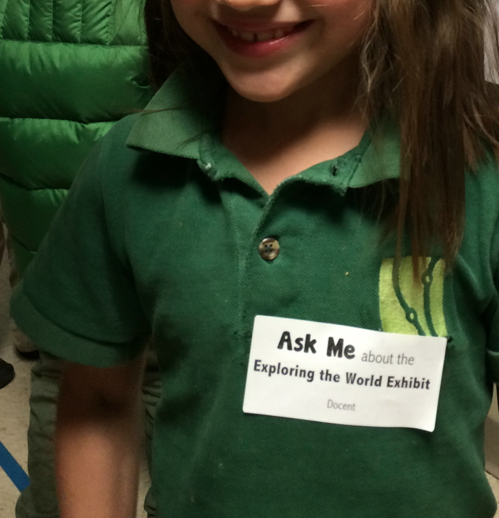
On the night of the exhibit, the kiddos got their "docent tags."  They loved hosting their friends and families around the exhibit, pointing out their details on the map and their book club posters. We managed to pull in a number of standards and skills with this project and it was obvious with all of the connections that the kiddos made as they talked about what they'd learned!


Nonfiction Reading Book Clubs

We have yet another snow day, so I'm catching up on months of blogging...

I've already posted about some of the components of our last reading unit, including topic bins and anchor charts, but one important part of this unit was actually how we concluded it.  During the final week of the unit, the kiddos met together in nonfiction book clubs.

I started by asking my readers to write down 3 topic bins they would be interested in studying a bit more closely.  Fortunately, I was able to get nearly everyone into one of their top choices.  After they were all assigned to groups, they had a few days to explore their new topics.  The kiddos practiced identifying important vocabulary, taking notes, organizing and comparing facts, and planning questions to research more.

As the conclusion and celebration to this unit, the kiddos worked together with their book club members to create posters about their topics.  Each book club member chose some of the important facts from their topic to write and draw about.  They were so cute consulting their sticky notes and jotting down details!  Then I met with each group to choose a heading for their poster.  I typed up the titles for each poster, but let the kiddos decide how to organize their information.  They were very thoughtful about how to place each section and connect the ideas.


The posters turned out great and were an important part of our "Exploring the World" Museum exhibit (more on that soon!)